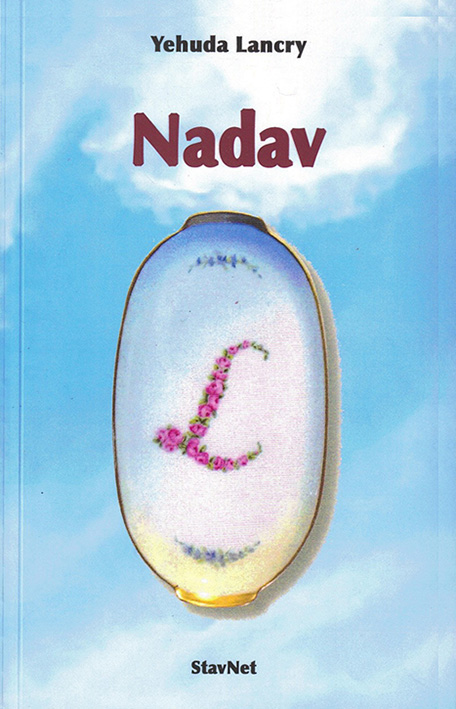
In a large hospital in Manhattan, a father – the author of this book – spends forty days and forty nights at the bedside of his son, Nadav. As the weeks succeed each other, the final stages of the life of this young man of thirty-six, a father of three, gradually take place because of a lymphoma that fatally complicated a congenital ailment. Already mourning the loss of his son Ran, Nadav’s older brother, twelve years earlier to the same medical problems, their father, caught in the throes of a downward spiral, foresees this second imminent loss.
What the author offers us here is a father’s intense, poignant narrative as he doggedly begs for the salvation of a son who died in the serenity of his faith in invocations, prayers and supplications. This book is an offering to Nadav and his wife and children, a relic adrift among the waters of the abyssal, all-consuming deeps. The conflict between the Jews and the Arabs in the Holy Land is part of a complex history that spans several centuries. However, hostilities intensified at the end of the 19th century with the emergence of the Zionist movement and the rise of Arab nationalism. Before the end of the British Mandate (1920-1948), the United Nations General Assembly proposed, on November 29, 1947, the partition of Palestine into two states: a Jewish state and an Arab state. This plan, accepted by the Yishuv (the Jewish community in Palestine), met strong opposition from neighboring Arab countries. David Ben-Gurion then proclaimed the creation of the State of Israel on May 14, 1948. The author traces the different stages and wars that followed while analyzing their impact on the region and Israeli society. The conflict persists despite peace agreements with Egypt and Jordan, as well as the Abraham Accords and the Oslo Accords signed on September 13, 1993 with the Palestinians.
The rise to power of Hamas, a jihadist terrorist movement, in January 2006 in Gaza, undermined the Oslo Accords and reaffirmed Islamic Jihad’s determination to drive the Jews from their ancestral land. Furthermore, the inclusion of the far right in the Israeli government exacerbates the situation. “Black Saturday,” October 7, 2023, saw 1,200 civilians – babies, elderly people, women raped and beheaded – brutally murdered; over 200 were kidnapped, dead or alive. It was a pogrom of an unprecedented scale since the Holocaust. This terror was unleashed on the territory of Israel despite the strength of its army. Since this tragic event, the situation in the Middle East has changed dramatically. Israel finds itself at war on several fronts: Gaza, the West Bank, Hezbollah, Syria, Iraq, the Houthis, Iran… Although Israel has achieved significant successes against its adversaries – such as the destruction of pagers or the elimination of Nasrallah, Sinwar, Haniyeh, and several top military leaders – it is clear that a war that does not conclude with a peace agreement or a lasting ceasefire can never be considered fully won.